I was poking around the in the unused corners of my basement kingdom (SWMBO rarely lets me play upstairs), and I came across some old manuals. Damn, but they brought back some happy memories! Maybe they’ll do the same for you.
This is the manual for the 4004 microprocessor. Hard to believe that microprocessors haven’t been around forever, but it was in 1973 when the very first one came out. I can remember receiving this and poring through it.

The 4004 begat the 8008, the first 8-bit microprocessor. This is the one that truly launched the microcomputer revolution.

Once the 8008 came out, pretty quickly came the designs for microcomputers based on them. I actually built something similar to this. The 8008 was a beast of chip to use, requiring 3 voltages (+5, +12, -12), and had a single 8-bit bus that was used for everything from memory to i/o.

I built systems based on several different microprocessors, and then came the era of the single-board computers. And they cost less than building it from scratch! Here’s the manual one that I bought (and still have kicking around somewhere), based on the 6502 chip. It was pretty famous, in it’s day (the late 70’s).
 Then came the era of the 8080 chip, and this was powerful enough to merit its own real operating system. CP/M filled this void, and it was the first widely-used o/s. It wasn’t plug-and-play, of course … you still had to customize it to your own system. In assembly language, of course. Keep in mind that nothing was standardized in those days! Interesting times, and it all seemed like magic.
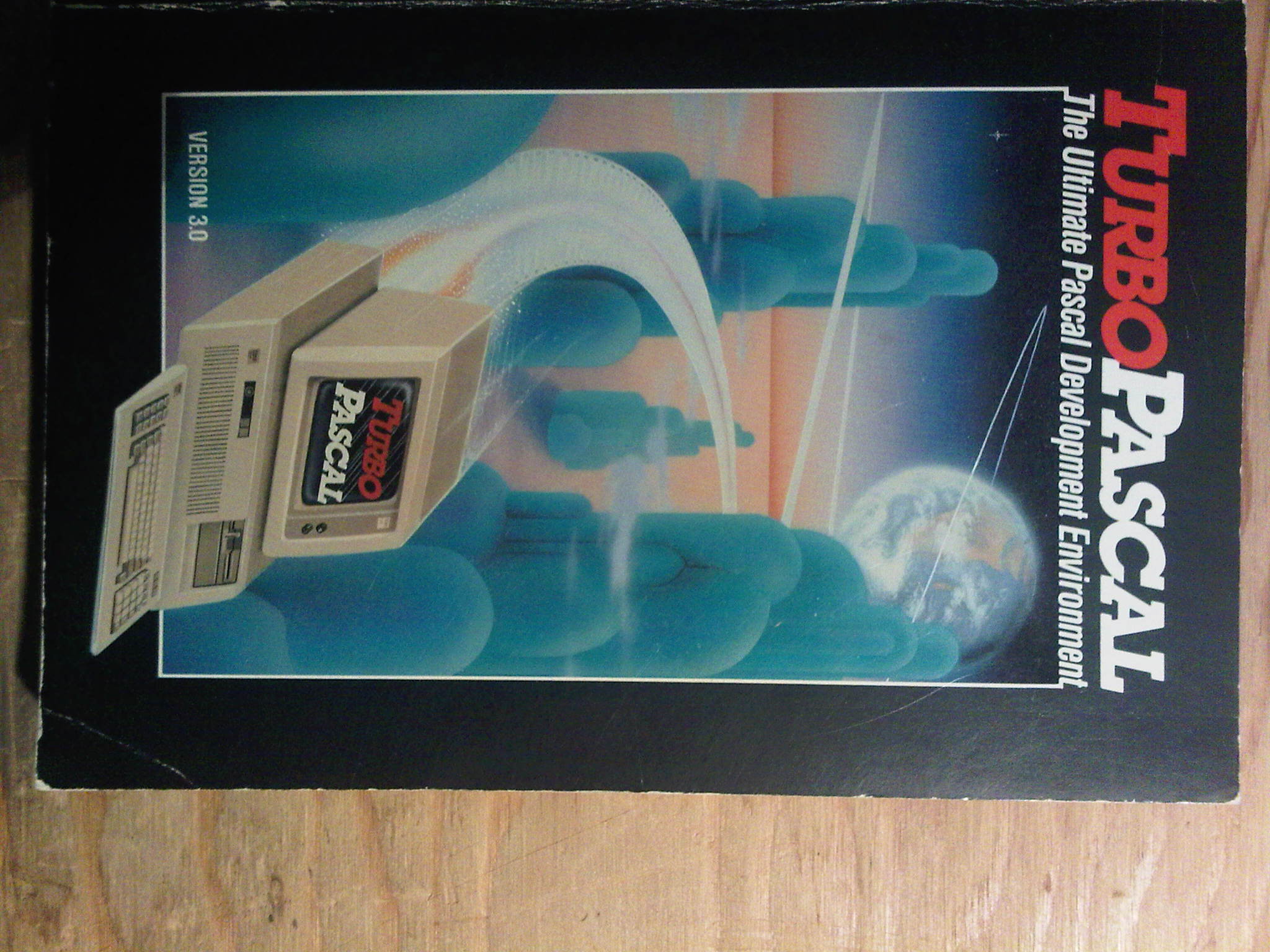
 After CP/M and the 8080 era came the IBM PC and MS-DOS (which was based in large part on CP/M). And this ushered in the era of wide-spread software development. One of the “big things” to emerge was Borland and their series of “turbo” languages. The first of these was Turbo Pascal. Pascal, you see, was going to take over and become the One True Language … all the pundits and academics said so. Heck, even the Intel 8088 chip used in the IBM PC’s (from which sprang the 80286, then 80386, then Pentium, and so forth) were designed to optimize running Pascal! The Borland Pascal was unique in that it offered a full IDE (integrated development environment), and really fast compile times. Both of those were unheard of in those days, but are ubiquitous now.
 And now for something completely different. Hard core techie porn … the fabled GE Transistor Manual. This is the 7th edition from 1964 that I bought as a teenager. Note the $2 price! It was 658 pages of theory and specifications and practical applications. Most of it was above my head as a teen, but was invaluable in college where the theory section actually helped me.
